Beta Version

Website Last updated:

July 17, 2026

Simplified Guide
The Decision to Reclassify the Value-Added Tax Field Violations

Zakat, Tax and Customs Authority

January 30, 2022

Contents

1. Highlights of the Decision

2. What Is Not Covered by the Decision?

3. Classification of Violations According to the New Decision

4. Illustrative Examples of the Decision to Reclassify VAT Violations

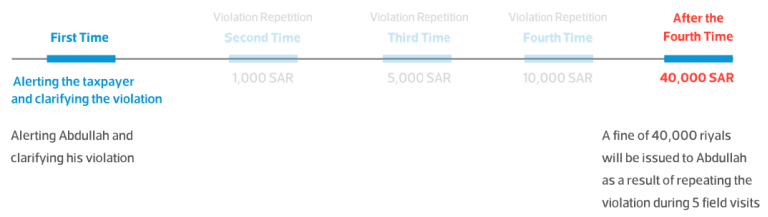
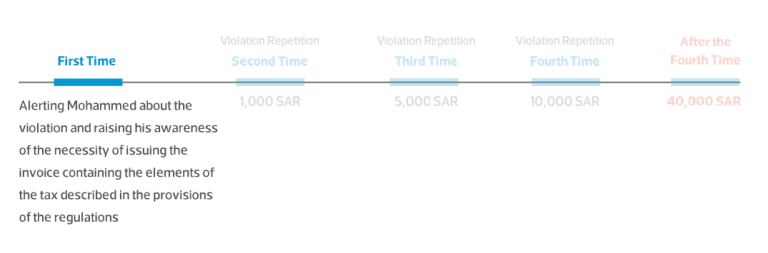
First: Violation of non-compliance to issue a tax invoice
First: Violation of non-compliance to issue a tax invoiceE-Invoice Violations
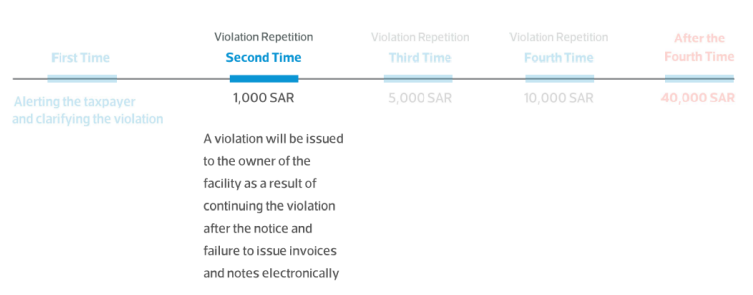
Second: Violation of not issuing and keeping invoices and notes electronicallyIllustrative Examples of the Decision to Reclassify VAT Violations
Third: Violation of not keeping invoices, records and accounting documentsIllustrative Examples of the Decision to Reclassify VAT Violations
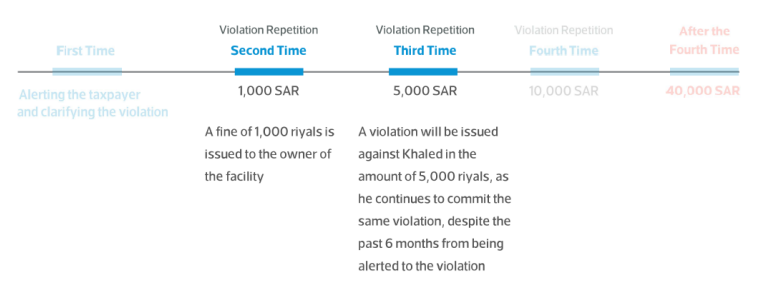
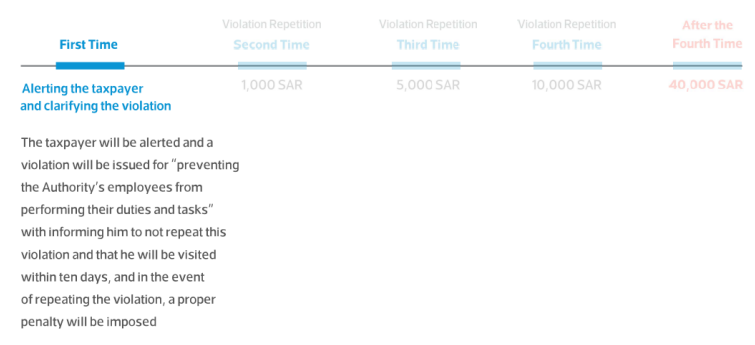
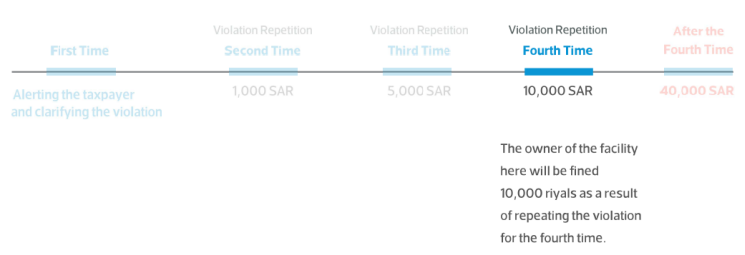
Fourth: Violation of Preventing or hindering the Authority's employees from performing their job duties and tasksIllustrative Examples of the Decision to Reclassify VAT Violations
Fifth: Violation of incorrectly calculating the due taxIllustrative Examples of the Decision to Reclassify VAT Violations
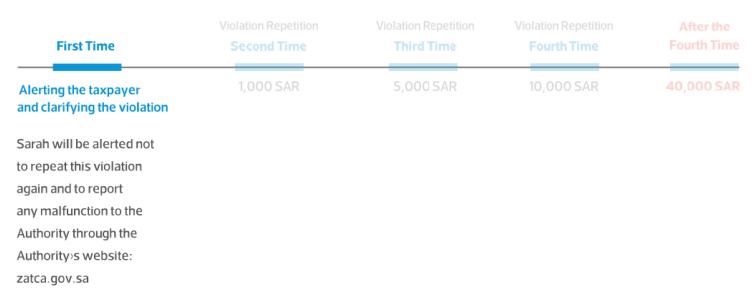
Sixth: Violation of not notifying the Authority of any malfunctions that hinder the process of issuing invoices and electronic notesIllustrative Examples of the Decision to Reclassify VAT Violations
Seventh: Violation of deleting invoices or electronic notesIllustrative Examples of the Decision to Reclassify VAT Violations
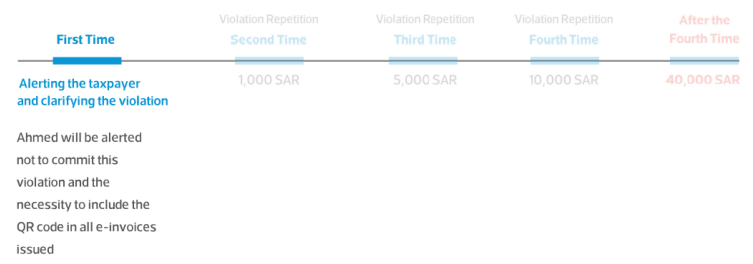
Eighth: Violation of not including the QR code in the e-invoiceIllustrative Examples of the Decision to Reclassify VAT Violations
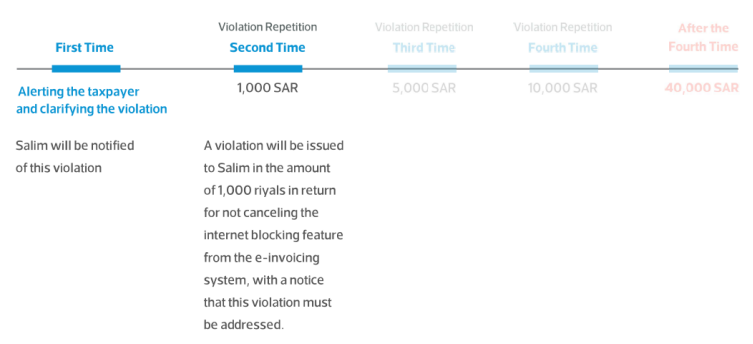
Ninth: Violation of including any of the prohibited functions in the e-invoicing system used to issue and save invoices electronicallyIllustrative Examples of the Decision to Reclassify VAT Violations
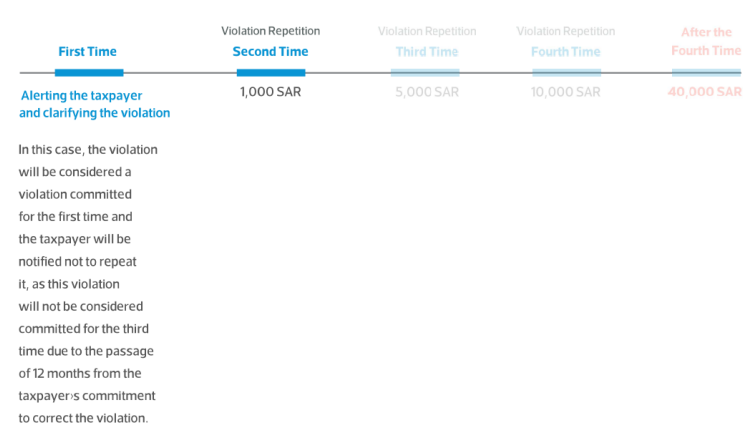
Tenth: An illustrative example of what was stated in the decision regarding calculating fines for violations that have been repeated 12 months after the taxpayer committed itIllustrative Examples of the Decision to Reclassify VAT Violations